

Re-Creating the Godzilla Roar from 1954

The History Behind the Roar
Image (From left to right): Sei Ikeno & Akira Ifukube
When the 1954 sound team (Ichiro Minawa & Hisashi Shimonaga) realised animal sounds weren’t going to work for Godzilla's roar, they consulted Akira Ifukube, the film's main composer, who proposed a more abstract approach.
Ifukube instructed his assistant Sei Ikeno to take two leather gloves that had been soaked in pine tar resin and drag his hands across the loosened strings of a double bass.
The recordings produced a harsh metallic screech.
The best-sounding takes were then processed on a tape machine at various playback speeds to alter the pitch. Which made the recordings sound more animalistic.
Finally, with some echo and several animal recordings layered on top… the Godzilla roar was born.
Inspired to Create

Equipment I used
Audio Equipment:
- Zoom H5 Studio
- Lom MikroUcho with the Ultrasonic Horn
- Cubase (my DAW software)
Sound Props:
- Acoustic Guitar (with 1 string)
- Golfing Glove (leather glove substitute)
- Cello Bow (or violin bow)
- Rosin
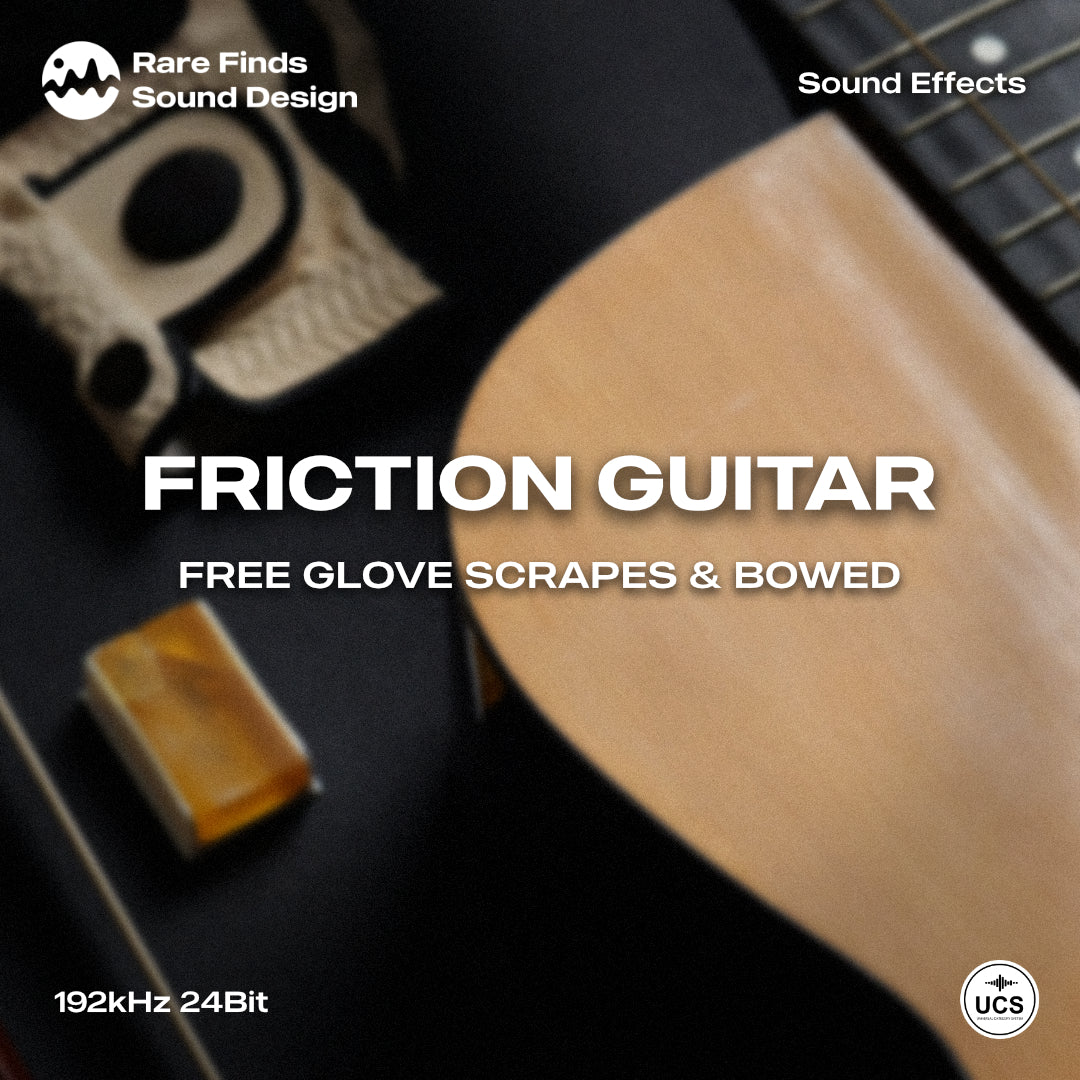
Download the FREE Mini Library if you don't have access to an audio recorder.
Understanding the Elements

Screech
Acoustic Guitar & Leather Glove
For the high-pitch screeching sound I used a golfing glove covered in rosin (the stuff string players put on their bows to create friction) and lightly scraped my hand across the string.
The rosin gives the exact same effect as the pine tar resin used on the leather glove from 1954.
But there was an obvious problem here... I was recording an acoustic guitar, not a double bass. Guitar strings are way thinner than double bass strings, so they sound much higher in pitch. But I had a trick for that.

Screech
performance
When I scraped the guitar string, I performed the sound at double the speed and a higher octave (using the original roar as reference for the pitch).
Then, in my DAW, I played that recording back at half speed. This drops the pitch dramatically while stretching out the sound. It's the modern digital equivalent of what the original sound team did on tape.
For my re-creation I found that dropping it down 1 whole octave and playing two consecutive notes on the sampler (one key after the other up the scale) got me remarkably close to the original roar.

Growl
bowed guitar
For the growl I used the same guitar but instead of scraping the string with the glove I used a cello bow to create a long sustained note.
The tricky bit was detuning the peg on the guitar while simultaneously bowing it.
My workaround for this was to place the guitar on a table covered with a blanket. This made it easier to twist the tuning peg and get a good angle for bowing the string.
If your guitar is slipping around when you bow it, you can use a ratchet strap or a belt to secure it to the table. It's a bit over the top but it works a treat!

Processing the Recordings

Effects
Plug-ins - Distortion
I applied a lot of Distortion (kHs Distortion) and Tape Saturation (Abbey Road J37 Tape) to add warmth, grit and to muddy up the guitar recordings as they sounded too clean for a 1950's recording.
Then I used a Guitar Amp simulator (Guitar Rig 6) to give the sound a sense of character and space. The Guitar Rig 6 preset I tweaked is called 'Matched Box' (mainly used on the screech sound).

Effects
Pitch shifting
I already previously mentioned pitch shifting the screech recordings to get them close to the initial screech in the roar. But I also automated a pitch shifter down in pitch for the long bowing sound.
This was to emphasise downward pitch bend you can hear in the original roar.

Effects
Layering other sounds
The original 1954 roar had animal sounds layered into the double bass recordings to give the roar those rumbling growling textures.
Unfortunately I haven't been able to record Lion's and Tiger's...yet. But I have built a few sound libraries inspired by those sounds.
A low gritty brick scrape from my Rock Movements library was layered in for the rumbling earthquake effect.
Then an intense stuttering friction sound from the Friction Rubber library was blended with a resonating drum sound from the Friction Drums library.
Together the sounds mimic that low guttural growling sound of a Lion or Tiger.

Effects
Reverb, Final Mix & Cassette Tape
Finally, adding a touch of Reverb and EQ-ing the sound to match the original got me very close to the 1954 roar.
One little bonus trick you can try is re-recording your sound design onto cassette.
I used a small Sony Dictaphone for this as it has built in 'Speed Control'. By adjusting the speed I can alter the pitch, just like the original sound team did with their reel to reel tape machine.
Plus, it adds that authentic tape character plug-ins try to replicate.
More ways to make Godzilla's Roar
More Sound Design Re-Creations
View all-

-

Re-Creating the Inception Sound - BRAAAM Sound ...
BRAAAM sound design inspired by the infamous Inception sound.
Re-Creating the Inception Sound - BRAAAM Sound ...
BRAAAM sound design inspired by the infamous Inception sound.
-

Re-Creating Spider-Man Web Shooters - Sound Des...
Web Shooter sound design inspired by the unique web slinging sounds from Spider-Man.
Re-Creating Spider-Man Web Shooters - Sound Des...
Web Shooter sound design inspired by the unique web slinging sounds from Spider-Man.
-

Re-Creating the Podracers - Spaceship Sound Des...
Spaceship sound design inspired by the iconic Podracers from Star Wars: Episode I - The Phantom Menace.
Re-Creating the Podracers - Spaceship Sound Des...
Spaceship sound design inspired by the iconic Podracers from Star Wars: Episode I - The Phantom Menace.


